April 22, 2013
by mmt65@cornell.edu
0 comments

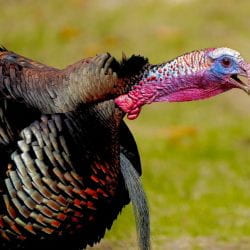
Wild Turkey

Many lucky youth were able to take the first shots on big toms this weekend, April 20 & 21, during the spring turkey youth hunt.  The regular spring turkey season opens May 1-31 with a season limit of two bearded turkeys, not to be taken in the same day.  The wild bird leg enchilada recipe from the previous snow goose post is excellent with wild turkey legs.  The recipe makes use of tougher leg meat and it’s delicious!

March 8, 2013
by mmt65@cornell.edu
0 comments

Miles and Miles of Snows

snow geese video 2013

photo courtesy of Anne Havelin


The amount of snow geese gathered in Seneca County right now is incredible.  Literally miles, and miles of geese flying in the air and huge flocks of snow geese on Cayuga Lake and farmers’ fields.  The number of snow geese has grown over the years to record highs, creating a need for special conservation efforts to protect the arctic habitat where they breed.  The daily limit for snow geese is 25 per day with no possession limit until April 15th. However, they are harder to harvest then one might initially think.  Snows tend to roost in the middle of the lake, making blind hunting a challenge.  They tend to flock in the middle of large fields, making hedge row hunting inaccessible.  And, they fly quite high, so the pot shot is out.  Yet, a successful snow goose hunt is worth the effort!  More information on conservation efforts for snow geese can be found on the NYS DEC website.

Some say that the flavor of snow geese is a bit stronger than Canada goose.  I haven’t noticed this per say, but I tend to stick to braising, smoking, or flavorful, spiced recipes for snow goose preparation.  Here is a savory recipe to try (courtesy of wildlife biologist, Andy Weik)…

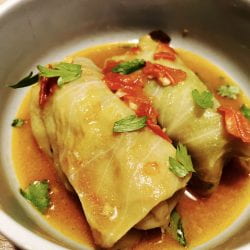
Wild Bird Leg Enchiladas (10 enchiladas)

2 large goose or wild turkey legs (thigh and drumstick) or combination of legs and wings of turkey or other game birds, about 3lbs

1 shallot, chopped

3 garlic cloves, crushed

1 TBSP coriander seed

2 bay leaves

1 TBSP fresh thyme or 1 tsp dried

1 tsp black pepper

2 small (10oz) or 1 larger can Enchilada sauce

10-14 oz. cheese –your choice of cheddar, jack, etc

Fajita seasoning – one (1.25 oz) packet or mix your own

1 can diced tomatoes (10-15 oz)– depending on tastes, can be tomatoes w/ green chilies or fire roasted tomatoes including liquid

1 can beans (optional) – choice of black, pinto, etc., rinsed and drained

1 large onion, chopped

2 or 3 cloves garlic, or more depending on tastes, crushed

10 large burrito size flour tortillas, preferably whole wheat

1 T. Olive oil for sauteing

Put meat in a crock pot (or heavy sauce pan with lid to cook on stove or in oven) and cover with braising liquid: some combination of water and/or stock or broth to cover bird parts in pot.  Add shallot, garlic, coriander, bay leaves, thyme, pepper and dash of salt (optional) to pot.  Cover and simmer until meat is tender and easily separates from the bone (about 4 hours on a high heat crock pot, 6-8 hours on low heat crock pot or 3 hours on the stove or oven at 325 degrees), adding more liquid as needed.  Let cool, and pick meat from bones.  Strain liquid and save (freeze) for other recipes or discard.   Chop meat into bite size pieces.

Saute 1 chopped onion in olive oil in large skillet until translucent, stir in the crushed cloves of garlic.

Stir in the meat and fajita seasoning, then add the can of diced tomatoes; drain the liquid of f the can of beans and stir in the beans.  Heat until bubbling.  Adjust seasonings – add hot sauce or diced chipotle peppers in adobo sauce to kick up the heat if so desired.

Heat oven to 350. Cover bottoms of baking dishes (probably one 13×9 and one 8×8) with enchilada sauce.  One at a time, heat tortilla shells in a large skillet or 10 seconds in the microwave to make flexible, add some meat mixture and about 1 oz. shredded cheese to each tortilla, roll and fold in ends, and place in baking dishes. When all the tortillas have been filled and placed in the baking dishes, top them with the remaining enchilada sauce, cover baking dish with foil, and bake until bubbling, about 40 minutes. Remove foil and bake another 15 minutes or until enchiladas start to crisp up.  Serves 10.

February 21, 2013
by mmt65@cornell.edu
0 comments

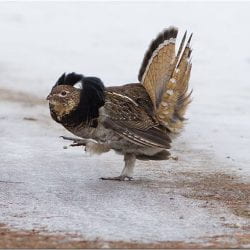
Ruffed Grouse- one week left

Ruffed Grouse image from dec.ny.gov

Only one week left for hunting the elusive ruffed grouse  in New York State.  The season closes February 28, 2013.  Researchers at Cornell are collecting ruffed grouse (Bonasa umbellus) samples to conduct nutritional analysis on the meat.   This tasty, “road chicken” is not currently listed in the USDA’s National Nutrient Database for Standard Reference, and therefore little is known about its nutrient content.  If you would like more information on the study or to contribute a grouse, please contact mmt65@cornell.edu.

January 30, 2013
by mmt65@cornell.edu
0 comments

Get your Game On! Venison Nachos for Super Bowl Sunday


This venison nachos recipe is a crowd favorite, plus using venison lowers the fat content compared to typical beef versions!

Venison Nachos

For the venison chili:

1 lb. ground venison

1 T. olive oil

1 medium onion, diced

2-3 cloves minced garlic

2-3 T. chili powder

1 28 oz. can diced tomatoes (or 1 qt. home canned tomatoes)

1 can (15 oz) red kidney beans or black beans (drained and rinsed)

salt and pepper to taste

Optional: 1 T. brown sugar, 1 t. crushed oregano, 1 t. cumin

In a stock pot, add the 1 T. olive oil and brown the venison over medium high heat.  Add the onion and cook 3-5 minutes longer until onion is translucent.  Add the garlic and spices and cook another minute (don’t let the garlic get brown).  Add the tomatoes and scrape the bottom of the pan with a wooden spoon or non-metal spatula.  Bring mixture to a gentle boil, then lower heat and simmer the chili about half an hour or more until it is thicker.  Add the beans and cook until heated through and the consistency is thick.  Season to taste.

To assemble the nachos:

7 oz. or so of tortilla chips

1 cup cheddar cheese, shredded

1/2 cup or so of sour cream

Preheat oven to 400 degrees.  In a 10 inch pie plate layer tortilla chips, then cover with venison chili (leave some room along the edges to pick up chips),  and top with cheddar cheese.  Bake for about 8 minutes until the cheese is melted.  Dollop spoonfuls of sour cream on top and serve.

November 28, 2012
by mmt65@cornell.edu
1 Comment

Duck Pizza

Duck season is open until December 9th and then reopens after Christmas on December 29th in the western zone of NY.  Duck pizza is an easy weeknight meal for the whole family to enjoy.

Duck Pizza

  • One large, boneless duck breast half, cut into bite-sized slices
  • 1 sliced small yellow onion
  • 1 Tbsp. olive oil
  • 2 Tbsp. honey
  • 1 pre-baked 10-12 inch pizza crust, preferrably whole wheat
  • 3-4 Tbsp. favorite BBQ sauce
  • 10oz shredded fontina cheese (or other favorite cheese)
  • 1 Tbsp. dried rosemary

Preheat oven to 450°F.  In a skillet over medium heat, sauté the duck meat in 1 tsp. of olive oil for 3-5 minutes.  Remove from pan.

Add the onions and additional 2 tsp. olive oil to the skillet over medium heat and cook until translucent and soft, about 5 minutes.  Mix in honey and continue to cook until brown and fragrant, about 5-7 minutes more.

Layer BBQ sauce, caramelized onions, cheese, duck slices, and rosemary.  Get creative with additional toppings, such as spinach, apples, or squash.  Bake in preheated oven until cheese in center of pizza is completely melted, about 10 minutes.  Serves 6-8.  Recipe is courtesy of Allison Urbani, Cornell Dietetic Intern.


November 20, 2012
by mmt65@cornell.edu
2 Comments

Venison Summer Sausage with Cheese and Jalapeno Pepper

Deer season is in full swing now with the regular deer season opening for most of New York State on November 17th.  Here is a recipe for a delicious summer sausage you can make at home.  It is perfect for holiday parties!

Venison Cheese and Jalapeno Summer Sausage

1 cup cold water

3 T. Tender Quick Curing salt

1-2 t. mustard seed

1-2 t. garlic powder

1 t. marjoram (optional)

1 t. ground black pepper

2 t. liquid smoke flavoring (omit this if smoking the sausage)

3 lb. ground venison

1 cup shredded or finely diced cheddar cheese

2 jalapeno peppers, seeded and finely diced

In a large bowl, mix water, curing salt, mustard, garlic, marjoram, black pepper and liquid smoke until the salt is thoroughly dissolved.    Mix in the ground venison, cheese and jalapeno peppers until evenly blended (easiest to do this with your hands, wearing food gloves).  Divide the mixture in half and roll each half into 2 inch thick “logs”.  Tightly wrap each “log” with aluminum foil and refrigerate for 24 hours.

After 24 hours, carefully remove the aluminum foil from the sausage logs and place them on a baking sheet.  Bake the sausage in a preheated oven at 300 degrees F until they reach an internal temperature of 170 degrees F, about 1.5 to 2 hours.  Let cool and slice thin to serve.

*if smoking the summer sausage, omit the liquid smoke when mixing ingredients.  Then instead of baking the unwrapped sausage logs, cook them in a smoker according to the manufacturers recommendations, making sure the meat reaches an internal temperature of 170 degrees F.


October 26, 2012
by mmt65@cornell.edu
0 comments

Foul Weather for Waterfowl

Canada goose opens for much of the NY state on Oct 27th, as well as ducks in the Western region.  Hurricane Sandy is also preparing to hit the Northeast in the next few days, so the weather should be interesting.  If the wind is cranking and the waves are kicked up, make smart decisions about sending out a dog or going out in small watercraft on the larger lakes. If the weather seems like it is turning disastrous, Cornell Cooperative Extension’s  Disaster Education Network  (NY EDEN) has excellent resources for being prepared during a severe storm.  A little foul weather usually helps bring in the waterfowl, so good luck out there.

October 18, 2012
by mmt65@cornell.edu
0 comments

Canning Meat

With deer hunting seasons about to be in full swing, you may wonder what to do with your quarry other than freezing it.  Seneca County Cornell Cooperative Extension is hosting a meat canning and jerky preparation workshop on Thursday, November 8th from 6-8PM in their office located on the 3rd floor of the Main Street Shop Centre in Waterloo, NY.  Participants will learn the important science behind safely canning meat and making jerky..  There will be taste testing of prepared meat and participants will also learn how to preserve venison meat during this hands-on workshop.  A Master Food Preserver from Cornell Cooperative Extension will be leading the workshop.   If you live too far away to attend this event, contact your local Cornell Cooperative Extension office to see if they have similar canning workshops in your county.   You can also reference “Home Canning Meat” from North Dakota State University Extension and  ”Handy Reference for Drying Meats” from Cornell Cooperative Extension.

October 3, 2012
by mmt65@cornell.edu
0 comments

New Youth Firearms Deer Season over Columbus Day weekend

Over Columbus Day weekend, October 6-8, youth ages 14 and 15 with a Junior Hunters License may take one deer.  Mentors with the youth may not carry a firearm.  See more about this exciting opportunity for youth at the NYS DEC website’s Junior Hunter Mentoring Page.   Bow season opened for most of the state on October 1.

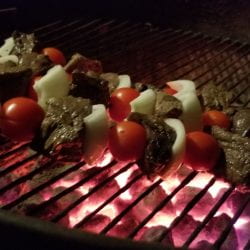
The weather is still warm, and great for grilling venison steaks.  Here is an easy, tasty recipe.

Grilled Venison Steaks

1 1/2 pounds of venison steak from the loin or round

1/2 cup of your favorite marinade (or make one with 3T olive oil, 1T lemon juice, 1T soy sauce, 1T Worcestershire sauce, 1 clove minced garlic, salt and pepper to taste.  Mix vigorously together with a wire whip or shake in a jar.)

Place meat in a ceramic or glass dish and pierce the steak all over with a fork or Jaccard-type meat tenderizer.  Pour the marinade over the meat, turning the meat to evenly distribute the marinade.  Cover and place in the refrigerator for about 4 hours, turning the meat a few times. Grill the steaks over high heat (hottest part of grill) about 4 minutes a side (best if cooked no higher than medium, ~145 degrees F).  It’s that simple.   Serves about 4.  Calories per serving:190.  total Fat: 6 g, saturated fat: 1.5 g.

September 6, 2012
by mmt65@cornell.edu
0 comments

Don’t Harvest Less…Cook More!

It is about that time of year when many hunters and anglers look into their freezers and see frozen meat from last season (or the season before, or the one before that).  You may think, “wow, I need to eat this up” or maybe,”I wish my family would eat this too.” Or maybe you say to yourself, “I shouldn’t keep so much meat this season or harvest so much game.”   Well, here are some ideas to help get your freezer cleaned out and to help you feel good about enjoying your future harvest.

1.  Take packages of meat out of the freezer regularly and put them in the refrigerator to defrost.  Once the meat is thawed, you will feel more compelled to cook and eat it right away!  Work it into your weekly menu.

2.  Use game meat in casseroles, stews, and ethnic curries.  Thai and Indian curries add lots of flavor, and slow cooking in sauce tenderizes the meat.  You can combine summer veggies into these dishes and cilantro for fresh flavors….get creative!

3.  Try new sauces.  There are many different bottled sauces in grocery and specialty stores.  Read the labels for recipe suggestions and substitute game meat.

4.  Modify your favorite recipes, using game meat.

5.  Search the web for recipe ideas.  Many recipe sites have search features to find recipes for ingredients you have on hand.  Or, try a recipe that is new to you from this site!

6.  Have a “Wild Harvest Table” party, serving game-focused foods and pairing locally produced wines.  Invite lots of people and have fun!

7.  This Thanksgiving, feature wild game and fish on the menu.

8.  Give some meat to friends and family (don’t give away meat that is over a year old) .

9.  Make jerky to take with you hunting this year and to share with friends.  Recipe here.

10.  Consider donating some of this year’s venison to the Venison Donation Coalition.  You can find a meat processor on their website - http://www.venisondonation.com.  Their is no cost to you for processing the meat and it goes to families in need through the Food Bank system.

Bon Appétite and Happy Hunting!